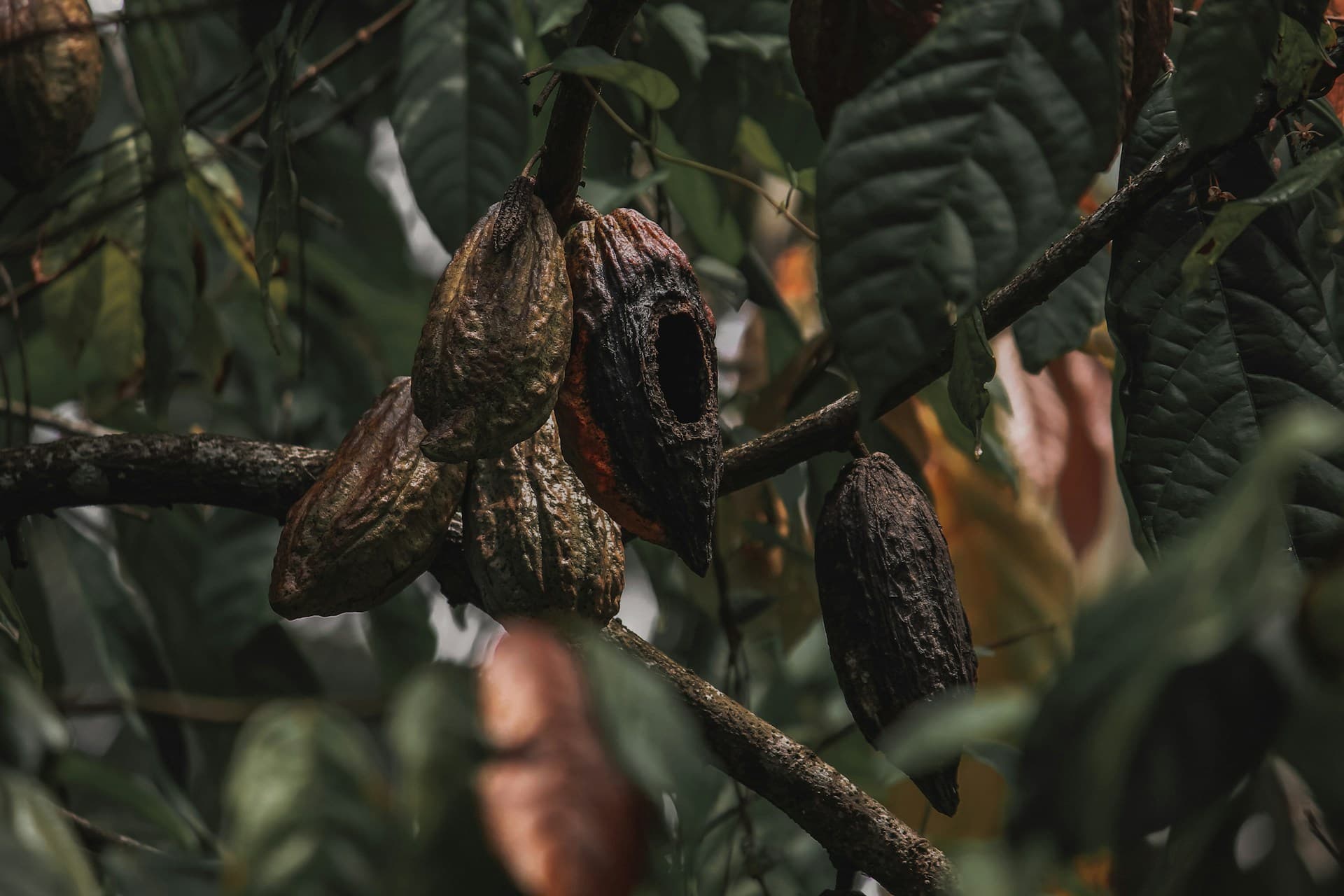
Close-up of cacao pods on a tree in a tropical plantation
Cocoa · EUDR · 30 Dec 2026← EUDR overview

Cocoa exporters: EUDR compliance from Latin America and West Africa

Every shipment of cocoa entering the EU from 30 December 2026 must be accompanied by a verified Due Diligence Statement in EUDR Information System. We prepare and file it for you — from raw farm coordinates to reference number — as your Article 6 authorized representative.

Why cocoa compliance is harder than it looks

Four pain points specific to cocoa supply chains

01

Certifications don't satisfy EUDR

UTZ, Rainforest Alliance, and Fairtrade certifications were never designed to provide the geolocation data EUDR requires. A certificate of sustainable origin does not include a GeoJSON polygon, a per-plot deforestation assessment, or a EUDR Information System reference number. European buyers who previously accepted certification alone will now require a valid DDS alongside it.

02

Fermentation stations blend lots from many farms

Cocoa compliance is not at the fermentation station — it is at the production plot. A fermentation centre that processes cocoa from 300 farmers requires 300 verified farm locations. Lot blending happens before fermentation, so traceability data must be captured at farm delivery — before lots are mixed together.

03

West African origins require enhanced satellite verification

Côte d'Ivoire and Ghana supply roughly 60% of global cocoa. Both countries have significant historical deforestation associated with cocoa expansion. Every plot from these origins requires rigorous Sentinel-2 verification against the 31 Dec 2020 baseline — even farms in long-established growing zones. Any unverified plot is a customs blockage risk.

04

Fine-flavor supply chains involve many intermediaries

Ecuador's Arriba Nacional and Peru's native cacao varieties are traded through specialty exporters who aggregate from dozens of cooperatives, each with hundreds of member farms. The longer the chain between farm and port, the more traceability data must be reconstructed back up the chain toward its origin. We work backwards from the exporter to each production plot.

Technical requirements for cocoa

What EUDR requires — specifically for cocoa

Geolocation — two rules

  • Plots <4 ha: a single latitude/longitude point, minimum 6 decimal places. Most smallholder cacao farms qualify here.
  • Plots ≥4 ha: a full GeoJSON polygon — not a central point. Required for estates and large cooperative plots.

Cutoff date: 31 December 2020

Cocoa must have been produced on land that was not deforested after 31 December 2020. We verify every plot against Sentinel-2 imagery and Global Forest Watch tree cover loss data from that date forward. Because fermentation stations blend lots from many farms, the deforestation check must be applied per production plot — not at the fermentation centre. Any plot showing forest cover change after the cutoff requires documented mitigation before a DDS can be filed.

Fermentation station ≠ production plot

EUDR compliance is verified at the production plot where cacao was grown — not at the fermentation or drying station. The DDS must list every farm that contributed to the shipment, with coordinates, supplier name, and deforestation evidence. A fermentation centre with mixed lots from 400 farms requires 400 individual plot records.

HS codes for cocoa under EUDR

  • 1801.00 — Cocoa beans, whole or broken, raw or roasted
  • 1802.00 — Cocoa shells, husks, skins and other waste
  • 1803.10 — Cocoa paste, not defatted
  • 1803.20 — Cocoa paste, wholly or partly defatted
  • 1804.00 — Cocoa butter, fat and oil
  • 1805.00 — Cocoa powder, not containing added sugar

Country-by-country

Where you produce — what that means for EUDR

Latin America and West Africa — both corridors covered.

Ecuador

Standard

World's leading exporter of fine-flavor cocoa (Arriba Nacional / CCN-51). Main growing regions: Los Ríos, Manabí, Esmeraldas. ANECACAO farmer registries provide a useful starting point, but plot-level GPS data is rarely in GeoJSON format. Export chains are relatively short — compliance is achievable once coordinates are collected from registered farms.

Main challenge: GPS data exists in farmer registries but not in GeoJSON format

Peru

Standard

Growing Amazonian cacao sector in San Martín, Ucayali, and Ayacucho. High proportion of indigenous-community plots where land titles are informal. Post-harvest cooperatives blend lots before fermentation — traceability must be captured at farm delivery, before lots are mixed.

Main challenge: Indigenous land tenure and lot mixing before fermentation

Colombia

Standard

Arauca and Tumaco are the two major growing regions — both post-conflict zones with historically incomplete land registries. FEDECACAO provides farmer registration, but plot-level coordinates are often absent. Tumaco (Nariño coast) also requires heightened deforestation scrutiny given active forest frontier pressure.

Main challenge: Post-conflict land registries and deforestation pressure in Tumaco

Dominican Republic

Standard

Smaller export volume but high-value chains — predominantly organic-certified (Fairtrade, Rainforest Alliance). These certifications do not provide the plot-level polygons EUDR requires. Farms concentrated in Duarte and Sánchez Ramírez provinces. Traceability from farm to fermentation centre is generally well-documented by cooperatives.

Main challenge: Certifications do not substitute for EUDR geolocation requirements

Côte d'Ivoire

Standard / Enhanced scrutiny

World's largest cocoa producer (~40% of global supply). Historical deforestation associated with cocoa expansion makes 31 Dec 2020 baseline verification essential for every plot. The REDD+ Cocoa Program provides some traceability infrastructure, but plot-level GPS coverage remains incomplete across the 600,000+ smallholder farms supplying major exporters.

Main challenge: Vast smallholder base with incomplete plot-level GPS coverage

Ghana

Standard

COCOBOD (Ghana Cocoa Board) operates a licensed buying system with farmer ID cards — one of the more structured traceability systems in West Africa. However, COCOBOD registration does not include geo-coordinates in EUDR-compatible format. The ID system is a strong starting point; the gap is converting it to GeoJSON polygons with deforestation verification.

Main challenge: COCOBOD registry exists but lacks GeoJSON-format coordinates

Cameroon

Standard

Third-largest African cocoa producer. Growing regions in Centre, Sud, and Est provinces border intact forest blocks. Forest-adjacent plots require careful Sentinel-2 analysis. Supply chain is fragmented — many small traders aggregate from multiple farms before reaching export warehouses, creating lot-mixing issues similar to those in LATAM.

Main challenge: Forest-frontier plots and fragmented aggregation supply chains

What you receive

Complete cocoa EUDR package

  • Polygon GeoJSON file for all production plots
  • Per-plot deforestation verification (Sentinel-2 vs 31 Dec 2020)
  • Country risk tier assessment with mitigation evidence
  • Article 10 due diligence narrative
  • DDS structured following EU Information System schema
  • EUDR Information System filing as your authorized representative (Art. 6)
  • Due Diligence Reference Number for EU customs
  • 5-year encrypted archive package

Typical scope — cocoa

  1. Risk Score

    3 days

    Operator/trader classification, country risk tier, readiness scorecard.

  2. Due Diligence Statement

    3–6 weeks

    Full compliance package — farm mapping through EUDR Information System filing.

  3. Monitoring

    Quarterly

    Annual DDS renewals and deforestation alerts per growing season.

Talk to a specialist

Scoped proposal — typically in 48h

Other EUDR commodities

CoffeeTimberSoyCattlePalm oil — coming soon

Working with timber, soy, or cattle? Talk to Diego directly →

Know your EUDR exposure in 10 minutes

Free compliance check — commodity classification, country risk tier, traceability readiness. No account required.

No account required · PDF report by email · No commitment

EUDR for cocoa exporters — Latin America and West Africa — Dexffo