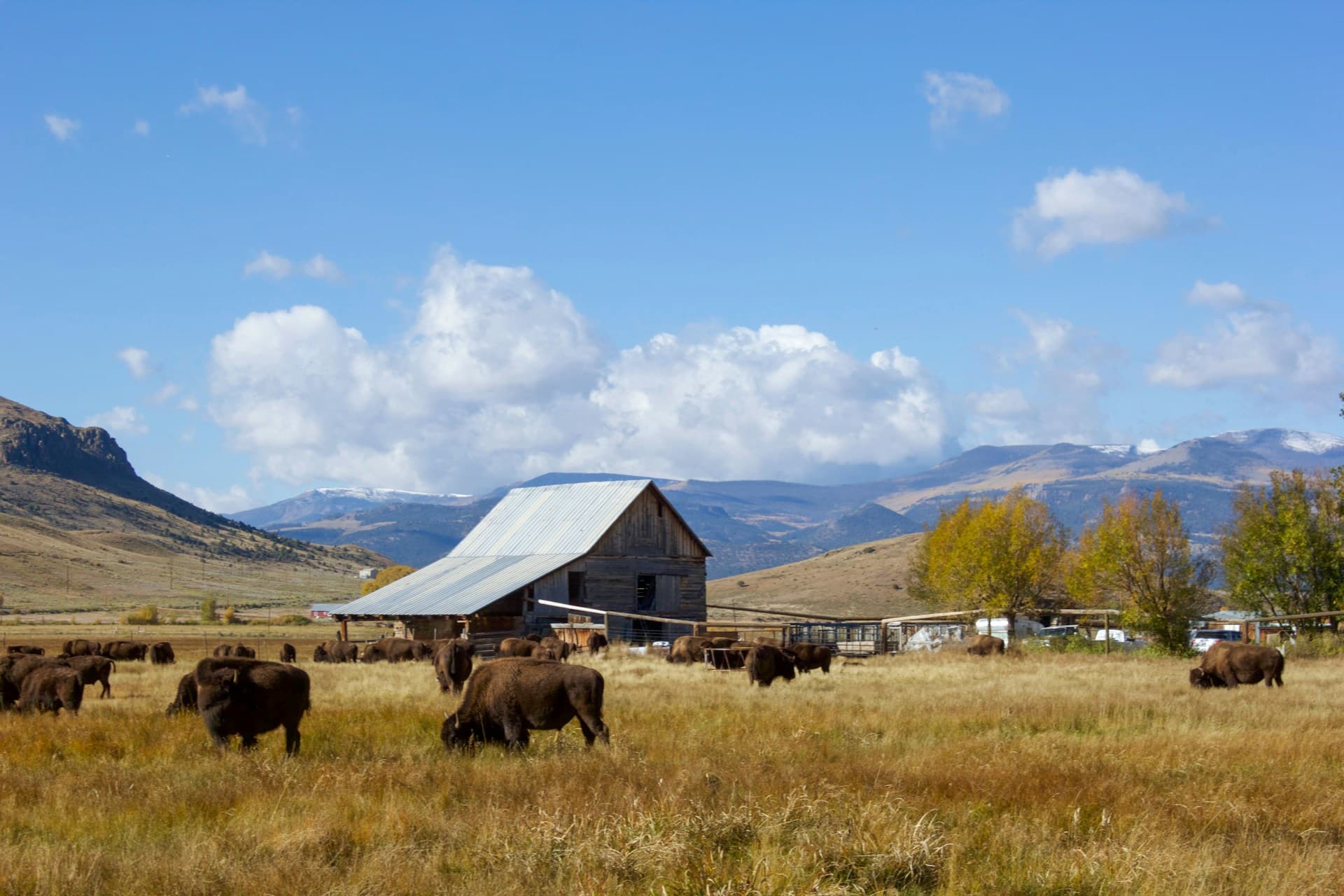
Cattle ranch with barn in Latin American valley landscape
Cattle · EUDR · 30 Dec 2026← EUDR overview

Cattle and beef exporters: EUDR compliance from Latin America to Europe

Every beef or cattle-derived product entering the EU from 30 December 2026 requires a verified Due Diligence Statement in EUDR Information System — tracing back to the individual farm where the animal was raised. We map your full supply chain and file as your Article 6 authorized representative.

Why cattle compliance is harder than it looks

Four pain points specific to cattle supply chains

01

Cattle move through multiple farms — which one is the "production plot"?

EUDR defines the production plot as the land where the animal was raised. If a cow moved through a calving farm, a fattening farm, and a feedlot over three years, each farm must be GPS-mapped and verified — not just the slaughterhouse. Most beef exporters do not have multi-farm documentation for individual animals.

02

Brazil's SISBOV doesn't link to deforestation clearance status

SISBOV individual animal IDs are valid for food safety and market access purposes — but they tell you nothing about whether the farm of birth was cleared after 31 December 2020. EUDR and SISBOV are parallel systems with different data architectures. Both are required; neither substitutes the other.

03

Non-segregated slaughterhouses cannot produce EUDR-compliant shipments

A slaughterhouse that commingles EUDR-verified cattle with non-verified animals on the processing floor cannot isolate a compliant batch for EU export. Physical segregation — from lairage through carcass tracking — is a prerequisite. Infrastructure investment is a real compliance barrier for many mid-size processors.

Technical requirements for cattle

What EUDR requires — specifically for cattle

Farm-level geolocation — for every farm in the chain

  • Farms <4 ha: GPS point required for each individual farm in the animal's history.
  • Farms ≥4 ha: full GeoJSON polygon required — applicable to nearly all commercial ranch operations.

Cutoff date: 31 December 2020

Every farm where an animal was raised must show no deforestation after 31 December 2020. We verify each farm against Sentinel-2 imagery and GFW deforestation alerts from that date. Any farm showing forest cover change after the cutoff requires documented mitigation evidence before the DDS can be filed.

HS codes for cattle under EUDR

  • 0201 — Bovine meat, fresh or chilled
  • 0202 — Bovine meat, frozen
  • 0206.10 — Edible offal, fresh or chilled
  • 0206.29 — Edible offal, frozen
  • 0210.20 — Bovine meat, salted, dried or smoked

Hides, skins and leather (HS 4101, 4104, 4107) were removed from EUDR scope by the Commission's delegated act adopted July 2026.

Brazil-specific: three parallel systems

Brazilian beef exporters must align three systems simultaneously: SISBOV (individual animal tracking), GTA (movement records between farms), and CAR (farm polygon registry for deforestation verification). None of these systems speaks to the others — integrating them for EUDR compliance is the core technical challenge.

Country-by-country

Where you operate — what that means for EUDR

Latin America — the primary beef-to-EU export corridors.

Brazil

High (Amazon / Cerrado)

Cattle ranching is the primary driver of Amazon deforestation. Individual animal tracking via SISBOV exists, but farm-to-farm movement records (GTA — Guia de Trânsito Animal) do not capture deforestation clearance status. Every farm in the supply chain — from birth farm through fattening to feedlot — must be verified against the 31 Dec 2020 baseline. Brazil's CAR system provides farm polygons but requires EUDR-specific satellite cross-validation.

Main challenge: Multi-farm movement chains and Amazon overlap require full supply-chain mapping

Argentina

Standard (Gran Chaco exception)

Pampas grassland cattle carries minimal deforestation risk — the biome was largely converted long before the EUDR cutoff. However, Gran Chaco expansion in Salta, Santiago del Estero, and Chaco provinces has accelerated. Ranchers with operations in the Chaco biome require enhanced documentation. The Argentine cattle traceability system (RENSPA farm registry) is well-maintained for most operations.

Main challenge: Gran Chaco frontier ranches require deforestation verification

Uruguay

Standard

Uruguay operates one of the most comprehensive cattle traceability systems in the world: SNIG (Sistema Nacional de Información Ganadera) tracks individual animals from birth to slaughter with full farm history. Most Uruguayan ranchers are well-positioned for EUDR compliance — the challenge is mapping SNIG data to the EUDR Due Diligence Statement schema and filing in EUDR Information System.

Main challenge: Excellent traceability — challenge is schema mapping only

Colombia

High

Cattle ranching has historically driven deforestation in Colombian Amazon, Orinoquía, and Pacific coast regions. Traceability systems are fragmented — the ICA cattle movement guide exists but does not capture GPS coordinates of the birth or fattening farm. Farm-level GPS data is rarely available in machine-readable format, requiring field mapping as part of EUDR compliance.

Main challenge: Fragmented traceability and Amazonian origin farms require field mapping

Paraguay

High

Chaco expansion drives rapid cattle ranching growth in Paraguay, with some of the highest deforestation rates in Latin America. Formal land registry is incomplete in western Chaco departments. Paraguay's SENACSA cattle registry provides a documentation starting point, but independent Sentinel-2 satellite verification is mandatory for all Paraguayan-origin beef.

Main challenge: Chaco deforestation and incomplete land registry

What you receive

Complete cattle EUDR package

  • Full supply chain farm mapping: birth → fattening → feedlot → slaughterhouse
  • GPS coordinates and deforestation evidence for every farm in the chain
  • Per-farm Sentinel-2 verification against the 31 Dec 2020 baseline
  • SISBOV / SNIG / GTA movement data integration (Brazil, Uruguay)
  • Country risk tier assessment with mitigation evidence
  • Article 10 due diligence narrative
  • DDS structured following EU Information System schema
  • EUDR Information System filing as your authorized representative (Art. 6)
  • Due Diligence Reference Number for EU customs
  • 5-year encrypted archive package

Typical scope — cattle

  1. Eligibility Diagnostic

    3 days

    Supply chain depth assessment, country risk tier, traceability system audit, readiness scorecard.

  2. Due Diligence Statement

    4–8 weeks

    Most complex commodity — multi-farm chain verification required per animal cohort.

  3. Monitoring

    Quarterly

    Annual DDS renewals and deforestation alerts for all farms in your verified supply chain.

Talk to a specialist

Scoped proposal — typically in 48h

Other EUDR commodities

CoffeeCocoaTimberSoyPalm oil

Working with soy, timber, or palm oil? Talk to Diego directly →

Know your EUDR exposure in 10 minutes

Free compliance check — commodity classification, country risk tier, supply chain depth assessment. No account required.

No account required · PDF report by email · No commitment

EUDR for cattle and beef exporters — Latin America to Europe — Dexffo